Mozart & “Pathétique” Symphony
Sunday, October 25, 2026 | 2:30 PM
Merrill Auditorium
Table of Contents
Program
Program At A Glance
Program Notes
Guest Artist Bios
Hear the Program
Program
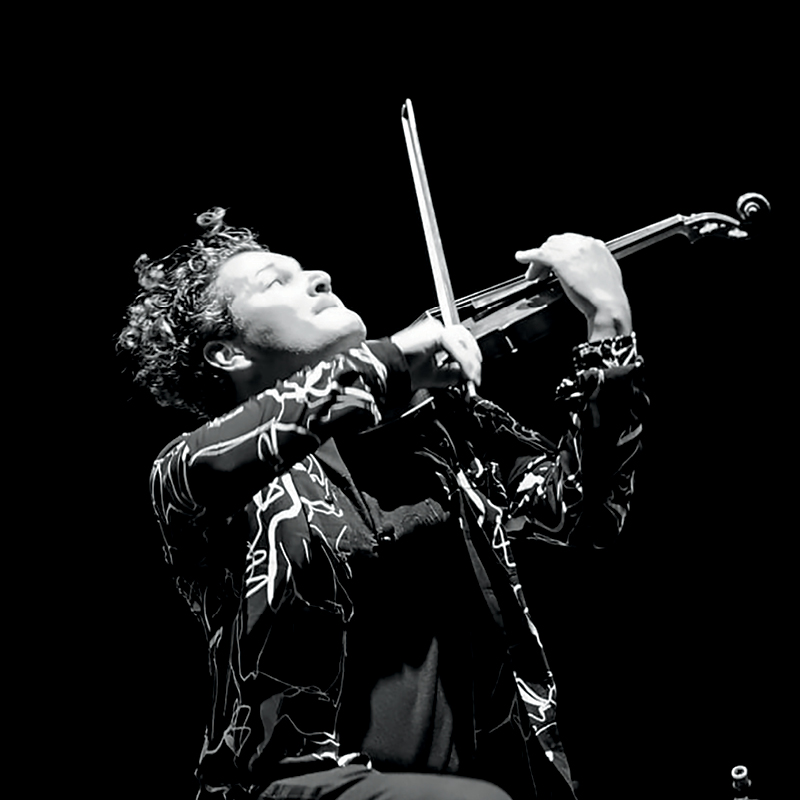
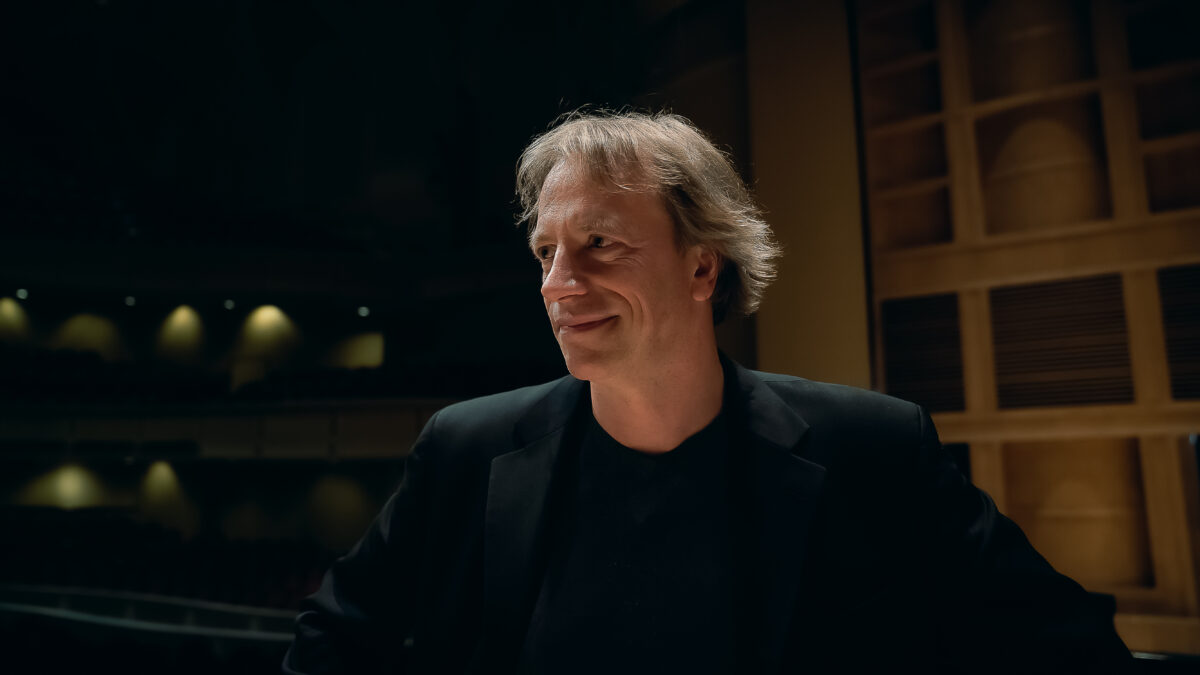
Alexandre Da Costa, guest conductor & violin
Wolfgang Amadeus Mozart Overture to The Abduction from the Seraglio, K.384
1756-1791
Wolfgang Amadeus Mozart Concerto No.5 in A major for Violin & Orchestra, K.219 (Turkish)
1756-1791
Piotr Ilyich Tchaikovsky Symphony No.6 in B minor, op.74 “Pathétique“
1840-1893
Program at a Glance
This concert features the PSO debut of violinist/pianist/conductor Alexandre Da Costa in a program of Mozart and Tchaikovsky. Mr. Da Costa was born in Montréal. His career as soloist and conductor takes him to North and South America and Europe. He plays a violin made in 1701 by Antonio Stradivarius. His fame as a soloist/conductor continues the centuries-long tradition of violinists who have integrated these roles.
A program of music by Mozart and Tchaikovsky promises a rich listening experience. It is also a logical pairing. Tchaikovsky discovered Mozart when he was 17 and heard Mozart’s opera Don Giovanni for the first time. He considered this work Mozart’s best, as well as the greatest opera ever written. Later in life, he wrote to his great patron Nadezhda von Meck, “It is to Mozart that I am obliged for the fact that I have dedicated my life to music. He gave the first impulse to my musical powers and made me love music more than anything else in the world.” Tchaikovsky devoted the fourth of his orchestral suites, which he subtitled “Mozartiana”, to orchestrations of several works of Mozart, in an avowed effort to make audiences more aware of Mozart’s genius.
The two Mozart works heard today brim over with youthful charm and vitality. They also bear witness to a fad in 18th century Europe for the Exotic East as exemplified by Turkey. The brief overture to his “Turkish” opera The Abduction from the Seraglio is in three parts, the outer two marked Presto, and the inner Andante a slower foreshadowing of the tenor’s first aria. The use of percussion in the fast sections is Mozart’s evocation of Turkish military bands.
The fifth (and final) of Mozart’s violin concertos, written for his own performance, carries the nickname “Turkish”. Mozart apparently never used this name for it, but nineteenth century critics and musicians decided the drones in the third movement sounded exotic enough to be “Turkish”.
Tchaikovsky did refer to his sixth symphony as the “Pathétique”, but it’s worth noting that the word did not connote “pathetic” as we now think of it, but rather “animated by intense emotion” or “strongly moving”. The symphony is indeed full of a wide range of strong emotions, but it ends in such despair that many commentators cannot resist seeing in it a premonition of the composer’s unexpected death only nine days after he conducted the work’s premiere.
– Martin Webster
Program Notes
Wolfgang Amadè Mozart
Overture to Die Entführung aus dem Serail, K.384
Wolfgang Amadè Mozart (he never used “Amadeus” except when making a joke) was born in Salzburg, Austria in 1756 and died in Vienna in 1791. He composed his opera Die Entführung aus dem Serail (The Abduction from the Seraglio) in 1782, and it premiered at the Burgtheater, Vienna the same year. The Overture is scored for flute, piccolo, 2 oboes, 2 clarinets, 2 bassoons, 2 horns, 2 trumpets, timpani, percussion, and strings.
*****
The Abduction from the Seraglio was one of Mozart’s first successes in Vienna, and reflects that city’s growing infatuation with “Turkish” music. Most opera-goers had never heard a note of authentic Turkish music, but that wasn’t the point—the ersatz variety given by the composers of the day was exotic enough for them. This explains in part why Mozart selected a story set in a Turkish brothel, and also the colorful additions he made to the orchestra: bass drum, cymbals, and triangle. These “military” instruments helped to set the tone, and he included them in the Overture as well.
The Overture is in three parts. The outer sections are the noisy “Turkish” music which, in Mozart’s words, “modulates on and on, from key to key so that I don’t believe anyone could fall asleep, even if he hadn’t slept at all the whole night before.” The central, much quieter section is a variant of the hero’s first aria, Hier Soll ich dich denn sehen, here set in a minor key. The overture leads straight into the first scene of the opera; Mozart himself composed the concert ending, though occasionally the endings composed by Johann André and Feruccio Busoni are substituted.
– Mark Rohr
Wolfgang Amadè Mozart
Concerto for Violin & Orchestra No. 5 in A Major, K. 219, “Turkish”
Wolfgang Amadè Mozart (he never used “Amadeus” except when making a joke) was born in Salzburg, Austria in 1756 and died in Vienna in 1791. He composed this concerto in 1775. It was probably performed in Salzburg soon after it was written, with Mozart himself the soloist, but the details of the first performance are unknown. Mozart left no cadenzas. The score calls for solo violin, 2 flutes, 2 oboes, 2 horns, and strings.
*****
“The violin is hanging up on its nail, I suppose.” So lamented Leopold Mozart, father of Wolfgang, in a letter to his son. When the younger Mozart moved to Vienna his career as a violinist had come to an end: he preferred taking the viola part in chamber music and when he died he didn’t even own a violin.
By all accounts Mozart had been a superb violinist. Even the hard-to-please Leopold thought so: “You yourself do not know how well you play the violin. If only you would do yourself credit and play with energy, with your whole heart and soul, yes, just as if you were the first violinist in all Europe.” And Leopold would have known—he was not only an excellent violinist himself, he had written a treatise on violin playing that is still relevant today.
While in Salzburg the younger Mozart wrote five violin concertos for his own use, one in 1773 and the rest in 1775. Though the last four were composed within months of each other they show a remarkable degree of growth from one to the next, as well as the precocious spirit of their nineteen year-old composer. The last, No. 5 in A major K. 219, is both the biggest and most masterful of all.
Mozart was rarely satisfied to have a soloist enter a concerto in a conventional way, and so it is here. After a brief orchestral exposition the music simply comes to a stop after a little upward arpeggio; the violin enters, adagio, as if in its own little world, playing music seemingly unrelated to what came before. After some dreamy meditation the soloist seems to realize that there’s a concerto going on and leads things back to the matters at hand. This is when we realize that the orchestral “theme” that opened the movement wasn’t really the theme at all: it was the merely accompaniment to the theme now played by the soloist. The movement ends with the same little arpeggio that ushered in the soloist.
The Adagio is one of those movements that remind us of why we keep coming back to Mozart. One magical moment follows another in a way that makes time stand still. The minor-key central section is nothing less than sublime.
Mozart called the finale a Rondeau (as opposed to rondo) because it contains an “interruption” of wildly contrasting music, something considered to be a characteristic of the French rondo. The work begins as a rather stately minuet, but midway through there comes a burst of passionate Gypsy music in a duple-meter and faster tempo. This is the “Turkish” music that gives the concerto its nickname. Never mind that it’s much more “Hungarian” than “Turkish”—if it came from the East it was Turkish to Mozart’s audience. The stomping, rustic refrain of this music makes the lyrical passages seem to soar. The minuet eventually returns to give us a graceful close—and the violin goes back up on its nail, this time for good.
– Mark Rohr
Peter Ilyitch Tchaikovsky
Symphony No. 6 in B minor, Op. 74, “Pathétique”
Peter Ilyich Tchaikovsky was born in Votkinsk, Russia in 1840 and died in St. Petersburg in 1893. He composed this symphony in 1893 and led the first performance in Saint Petersburg the same year. The score calls for 3 flutes, piccolo, 2 oboes, 2 clarinets, 2 bassoons, 4 horns, 2 trumpets, 3 trombones, tuba, timpani, percussion, and strings.
*****
When Tchaikovsky completed his Sixth Symphony he wrote to a friend: “I myself consider it the best and especially the most open-hearted of my works. I love it as I have never loved any of my other musical offspring.” To his publisher he wrote: “I give you my word of honor that never in my life have I been so contented, so proud, so happy, in the knowledge that I have written a good piece.” This happy time would be short-lived; within ten days of the Sixth Symphony’s premiere the composer lay dead, a victim of cholera—contracted, as the story goes, as a result of drinking un-boiled water.
It was probably an accident. A few years ago a Russian scholar maintained that Tchaikovsky had committed suicide because of the impending revelation of a homosexual affair with the son of a nobleman, but the scholarship has not stood up to scrutiny. While it’s true that Tchaikovsky had attempted suicide before and was the victim of severe bouts of depression, there’s no evidence that he took his own life.
Yet the music of his last great work makes one wonder. Where his Fourth and Fifth Symphonies are usually construed to mean the triumph over Fate—with “fate” being generally understood as his homosexuality—the Sixth ends in utter despair. It looks as if we’ll never know for sure what the work meant to Tchaikovsky himself, but in the end it matters little; the Sixth Symphony is an act of musical truth that proves itself anew with each succeeding generation of listeners.
Tchaikovsky’s “most open-hearted work” is also the most tragic, especially in the dark and brooding outer movements. The lamenting bassoon of the opening, set against low strings, is clearly tragic, yet it is some of the most beautiful music ever written. The second theme is also exquisite, with expressive accelerations and decelerations all explicitly marked by the composer. Yet the development is intense, restless, even fierce.
The two inner movements diverge from the story line, yet they are not a refuge. The second movement “waltz” seems unable to spring free of its uneven 5/4 meter; there is always an ungainly limp undermining its suave demeanor. Even the surface gaiety of the third movement’s march seems forced, even maniacal. Its “happy ending” arrives too soon: there is a whole world of the deepest passion—and the darkest desolation—yet to follow.
Tchaikovsky originally called this work a “Program Symphony” but stubbornly refused to divulge the program. After the first performance he realized the illogic of the matter and cast about for a proper subtitle. It came from his brother Modest. The Russian word Modest suggested was patetichesky, which translates into English as pathetic. But in Russian the word more nearly means an emotional or passionate suffering—a richer context than that which obtains from pathetic, and one that is most apt for both the composer and his last work, no matter what the truth of his demise may be.
– Mark Rohr
Mark Rohr was the Portland Symphony Orchestra’s Bass Trombonist from the mid-1980’s and program annotator from 1991 until his passing in 2019. We are privileged to continue publishing his program notes at his bequest.
Guest Artist Bios
Alexandre Da Costa, guest conductor & violin
Sony Classical artist, JUNO Award winner, and one of the rare musicians to enjoy major international careers both as violinist and conductor, Alexandre Da Costa is Artistic Director and Chief Conductor of Mexico’s Orquesta Sinfónica Sinaloa de las Artes. From 2019 to 2026, he served as Artistic Director and Chief Conductor of the Orchestre Philharmonique du Québec. Born in Montreal, he displayed exceptional talent from a young age, performing public concerts on both violin and piano by the age of nine and quickly attracting national attention as a prodigious dual-instrument virtuoso. Encouraged early on by Charles Dutoit, he began performing as a violin soloist with orchestra while still in his teens.
Da Costa holds a Master’s Degree and First Prize in Violin from the Conservatoire de Musique du Québec and a Bachelor’s Degree in Piano Performance from the University of Montreal. He later studied in Madrid at the Escuela Superior de Música Reina Sofía with the legendary Zakhar Bron and completed advanced studies in Vienna. Parallel to his violin career, he developed a deep commitment to conducting, training in Austria and Germany with renowned mentors such as Christian Schulz and Josep Caballé-Domenech.
Today, Alexandre Da Costa is considered one of the most versatile and sought-after conductors of his generation. He has led or performed more than two thousand concerts across North America, Europe, Asia, and Australia, appearing in major venues such as Vienna’s Musikverein, Berlin’s Philharmonie, Carnegie Hall, and Beijing’s Poly Theater. As guest conductor and soloist, he has collaborated with the Royal Philharmonic Orchestra, the symphony orchestras of Vienna, Berlin, Montreal, Toronto, Prague, Dresden, Bergen, Buffalo, the BBC Concert Orchestra, Spain’s National Radio & TV Orchestra, and many others.
Recent conducting engagements include the Vienna Symphony (Wiener Symphoniker), the Queen Sofía Chamber Orchestra of Madrid, the Basque National Symphony, the Krakow Philharmonic, the Seville Royal Symphony, and the Córdoba Symphony. His 2026–27 season features guest conducting invitations in Germany, the USA, Canada, Spain, Portugal, Argentina, Brazil, Ecuador, and Mexico.
As a solo violinist, he has worked with many of the world’s leading conductors including Rafael Frühbeck de Burgos, Leonard Slatkin, Lorin Maazel, Yannick Nézet-Séguin, Tugan Sokhiev, Vasily Petrenko, Matthias Bamert, John Axelrod, Johannes Wildner, and Peter Oundjian. His performances have been broadcast on the BBC, WDR, CBC, NPR, ORF and many other major outlets. He has premiered works by Elliott Carter, Michael Daugherty, Lorenzo Palomo, Paul Sarcich, Jean Lesage and Airat Ichmouratov, and he maintains an active chamber music career with artists such as Menahem Pressler, Elisabeth Leonskaja, Olga Kern, Matt Haimowitz, and Hélène Mercier.
A prolific recording artist, Da Costa has released 28 albums on labels including Sony Classical, Warner Classics, JVC/Victor, Naxos, ATMA and Universal. His recording of Michael Daugherty’s violin concertos with the Montreal Symphony won the 2012 JUNO Award for Classical Album of the Year, and his Beethoven Concerto with Klezmer cadenzas by Airat Ichmouratov was named CD of the Year by The Washington Post. His recent albums Stradivarius at the Opera (with the Vienna Symphony), Stradivarius baROCK and Stradivarius Je me souviens all achieved best-seller status.
Winner of many prizes and awards from institutions such as the Sarasate International Violin Competition and the Canada Council for the Arts, as well as the Medal of the Québec National Assembly.
A dedicated educator, Da Costa has taught masterclasses worldwide and served as Associate Professor and Head of Strings at Edith Cowan University in Australia. He has been invited to the Sydney Conservatorium, the University of Toronto, and the conservatories of Montreal, Madrid, and Shanghai, and has worked as a consultant for the Hong Kong Academy for Performing Arts and as a TEDx speaker. As concertmaster, he has led major orchestras such as the Vienna Symphony, Orchestre National du Capitole de Toulouse, and the Singapore Symphony under conductors including Philippe Jordan, Tugan Sokhiev, Günter Herbig and Lorin Maazel.
As an artistic leader and administrator, he has served as Artistic Director of the Stradivaria Festival since 2012, President of StradEdgy Inc. since 2018, and Artistic Director of the Orquesta Sinfónica Sinaloa de las Artes since 2025. From 2019 to 2026, he served as Artistic Director and Chief Conductor of the Orchestre Philharmonique du Québec. Recognized internationally as an expert on rare violins, he has studied and played more than 1,000 instruments by makers such as Stradivari, Guarneri del Gesù, Amati and Guadagnini.
Highly appreciated in the pop world, he has performed and conducted alongside major artists such as Gino Vannelli, Yandel, Mariah Carey, Ginette Reno, Roch Voisine, Robert Charlebois and Claude Dubois. Alexandre Da Costa performs on the 1701 “Deveault” Stradivarius, generously loaned by Guy and Maryse Deveault.
Hear the Concert