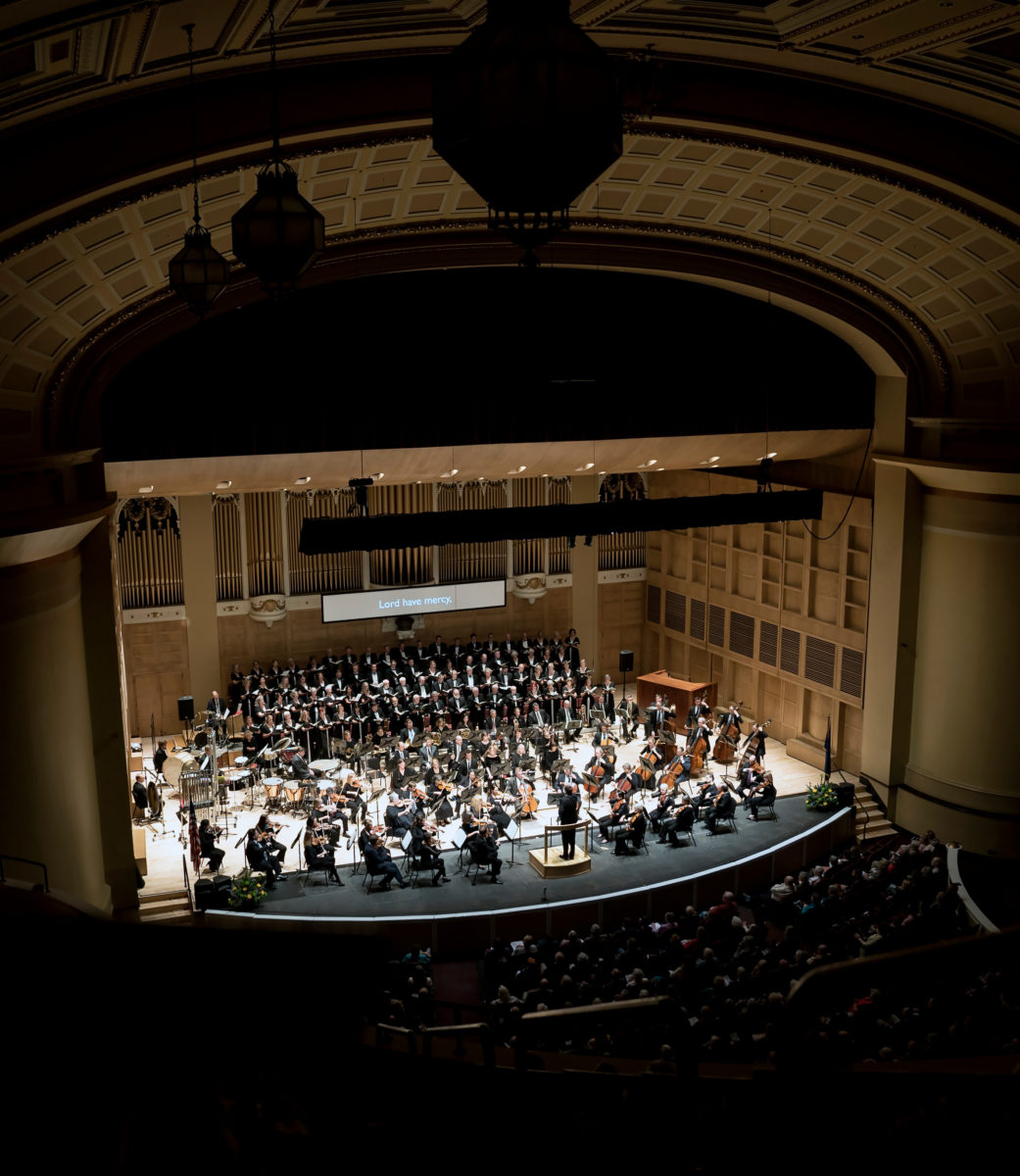
Mahler’s 6th Program Notes
Gustav Mahler
Symphony No. 6 in A minor
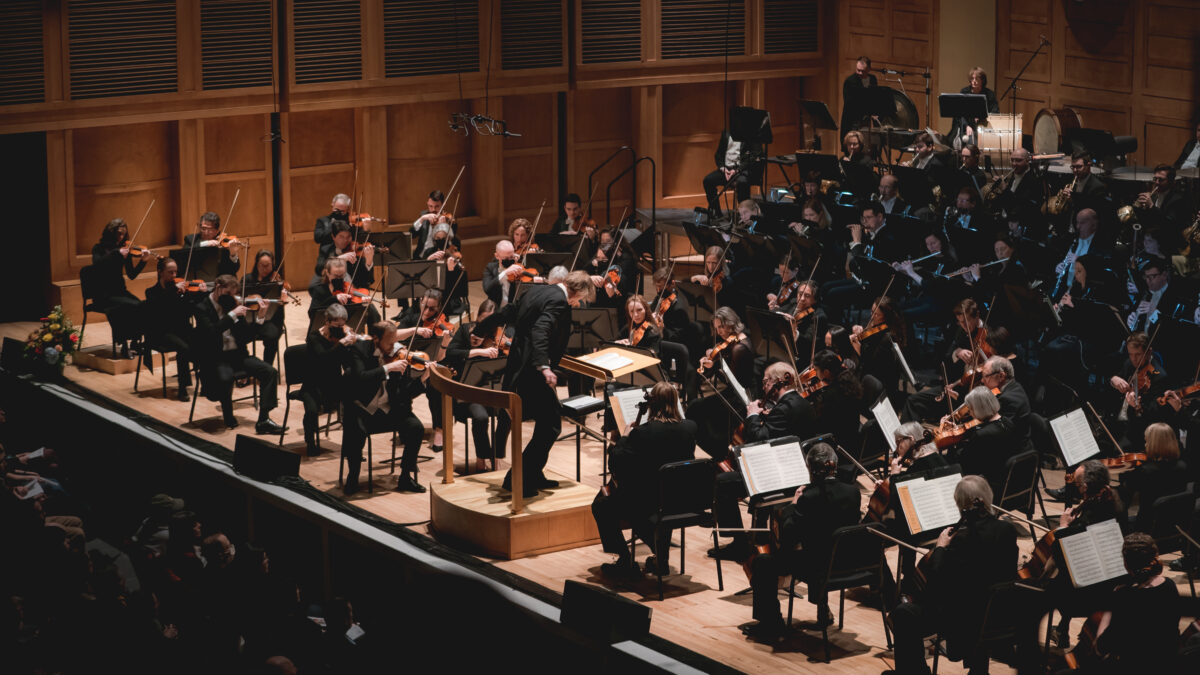
Gustav Mahler was born in Kalischt, Bohemia in 1860 and died in Vienna in 1911. He completed this work in 1905 and led the first performance with the Vienna Philharmonic Orchestra the following year. The Symphony is scored for 4 flutes (2 doubling piccolo), piccolo, 4 oboes, 2 English horns, 3 clarinets, D clarinet, E-flat clarinet, bass clarinet, 4 bassoons, contrabassoon, 8 horns, 6 trumpets, 4 trombones, tuba, timpani, percussion, 2 harps, celeste, and strings.
*****
“We came to the last rehearsals, to the dress rehearsal—to the last movement, with its three great blows of Fate. When it was over, Mahler walked up and down the artists’ room, sobbing, wringing his hands, unable to control himself.” —Alma Mahler
*****
Mahler, the composer of the most painfully personal music ever, was never more emotionally connected to a piece than he was to his Sixth Symphony. “Not one of his works,” said Alma, “came so directly from his heart as this one.” According to the composer, the “hero” of the Sixth Symphony is ultimately dealt “three hammer-blows of Fate, the last of which fells him as a tree is felled.” Mahler identified so strongly with his hero that he became terrified of conducting the third hammer-blow—so much so that he removed it from the score.
Such things help give Mahler his reputation for composing morbid, even neurotic music. Still, he also possessed a sublime understanding of joy, and the Sixth was written during the happiest days of Mahler’s life. His work as Director of the Vienna State Opera was becoming the stuff of legends. He had married the vivacious Alma Schindler, and he delighted in their two daughters. Even his own music, which had met only resistance, was beginning to achieve a glimmer of understanding.
Yet the Sixth is the bleakest of his works. Even his Kindertotenlieder (Songs on the Death of Children), completed during the same period, ends with a vision of children at peace. By the end of the Sixth, there is no peace, or even hope—only defeat.
As Alma explained, Mahler believed that an artist could intuit the future, and could not escape the emotional pain that his premonition brought. When Mahler first played the symphony through for her, they both wept: “The music and what it foretold touched us so deeply. The Sixth is the most completely personal of his works, and a prophetic one also. In the Sixth he anticipated his own life in music.”
In an instant, the first movement drags you forcibly into Mahler’s maniacal death march. Before long he announces his Fate theme, which comprises two parts: an ominous tattoo on the drums, and a major chord sliding inexorably to minor. This motive returns to mark the principal sections of his enormous sonata form. The soaring theme that begins in the strings is Mahler’s musical depiction of Alma. After he had sketched it he told her, “I don’t know whether I’ve succeeded or not, but you’ll have to put up with it.”
In the middle of the development, we suddenly find ourselves in startlingly new surroundings, as we hear ethereal music from the strings accompanied by the distant sound of cowbells. In Mahler’s words, we are hearing “the last greeting from earth to penetrate the remote solitude of the mountain peaks.” The Alma theme then returns to close the movement in temporary triumph.
The Scherzo is ponderous, with an ungainly gait produced by the placement of accents in all the “wrong” places. Even the sweet-sounding trios are perpetually off-balance; Alma likened them to “the arhythmic play” of their children. The ending gives no resolution.
The Andante moderato is the only respite from the relentlessness of the other three movements. Here there are no dramatic clashes, no sudden interruptions, just an unbroken string of different melodic elements that flow together seamlessly. They merge into a one continuous melody, like the many sides of the same personality.
The opening of the Finale is other-worldly, stepping beyond the mountain tops and into the realm of the psyche itself. Mahler gives the fate theme its most brutal rendition yet; it is no longer a signpost, but an integral part of the structure. The hammer-blows are terrible, enormously frightening. (Mahler specifies a “short, powerful, heavy-sounding blow of non-metallic quality, like the stroke of an axe.”) After the third, the music can only trail off into oblivion, with one last shriek of the A-minor chord.
Two important and difficult questions attend the performance of the Sixth. Mahler was an inveterate reviser. As he conducted his own pieces he noted carefully what worked and what didn’t, and revised accordingly. These were mostly matters of detail. But Mahler made two wholesale changes to his Sixth that profoundly alter the perception of the work.
The first involves the order of the two middle movements. Mahler originally conceived the work with the Scherzo coming first and the Andante second. After the first rehearsals, however, he reversed the order. This was how the symphony was published and how he always conducted it, but the exact reasons for the switch remain a mystery. There are many potential reasons: the key relationships among the movements, the motivic development, the question of where to put the breather that the Andante provides. Perfectly good arguments can be made for either order, but most conductors find Mahler’s original idea the most satisfying, and put the Scherzo first.
The other matter is the third hammer-blow. Mahler struck it out because he feared it, not for musical reasons. Its absence weakens the Finale and undermines the meaning of the work, so the third hammer-blow is usually restored.
If Mahler anticipated his own life in the Sixth, the three “great blows of fate” he expected are easy enough to find. The first was his resignation as Director of the Vienna Opera amid much tumult and acrimony. The second was the death of his first-born daughter Maria at age five, from which he never recovered. (Alma would never forgive him for having composed Kindertotenlieder, though he had begun the work before she had even met Mahler.) The third was the diagnosis of heart disease that eventually felled him as a tree is felled.
That was yet to come, and there were still symphonies to write. His next two would range far and wide, and the triumphant endings would return. In the Ninth, he would confront death on its own terms; yet he knew the ending already, having composed it in the Sixth.
– Mark Rohr