Dawnland to the Planets Program Notes
Max Richter
On the Nature of Daylight
Max Richter was born in Hamelin, West Germany on March 22, 1966. He now lives in England. On the Nature of Daylight was released in February, 2004 as part of the album The Blue Notebooks. It is scored for string orchestra: first and second violins, violas, cellos and basses.
*****
Max Richter born March 22, 1966 in Germany, but grew up in Bedford, UK. His musical studies took place at the University of Edinburgh in Scotland and at the Royal Academy of Music in London. He also studied with the renowned Italian composer Luciano Berio for a time.
Richter writes music that is rooted in the classical tradition but reaches vast audiences usually attuned to other genres. His music often reflects his personal convictions, meditating on world events or his own childhood. To date, the composer has more than three billion online streams and over one million album sales. A typical review called his 2004 album The Blue Notebooks, from which On the Nature of Daylight is drawn, “one of the most iconic pieces of classical and protest music of the 21st century.”
In the twenty years since the appearance of The Blue Notebooks, Richter has collaborated with a steady stream of choreographers, dramatists, screenwriters, and visual artists. He has said that he is “always composing,” not literally at a desk, but in the sense that musical ideas are always taking shape in his mind. He also performs regularly as a pianist in his own works.
On the Nature of Daylight has been used repeatedly in film and television, just now in the film Hamnet, but also in HBO’s The Last of Us, the British soap Eastenders, Disney’s Togo, and Scorsese’s Shutter Island, to name just a few.
On the Nature of Daylight relies for its effect on simple, clear textures and repeating harmonies. Set in the key of B-flat minor, which has five flats in its key signature, it sounds rich and mournful at the same time. It looks back to the most restrained and dignified moments of mourning in Baroque opera-Dido’s Lament in Purcell’s Dido and Aeneas was surely an inspiration-but its static harmonies keep it in the present day. It evokes melancholy rather than suffering and is perfect for moments in film that express regret or perhaps self-conscious sadness.
– Martin Webster
********
Jason Brown AKA Firefly
“Militikwat”
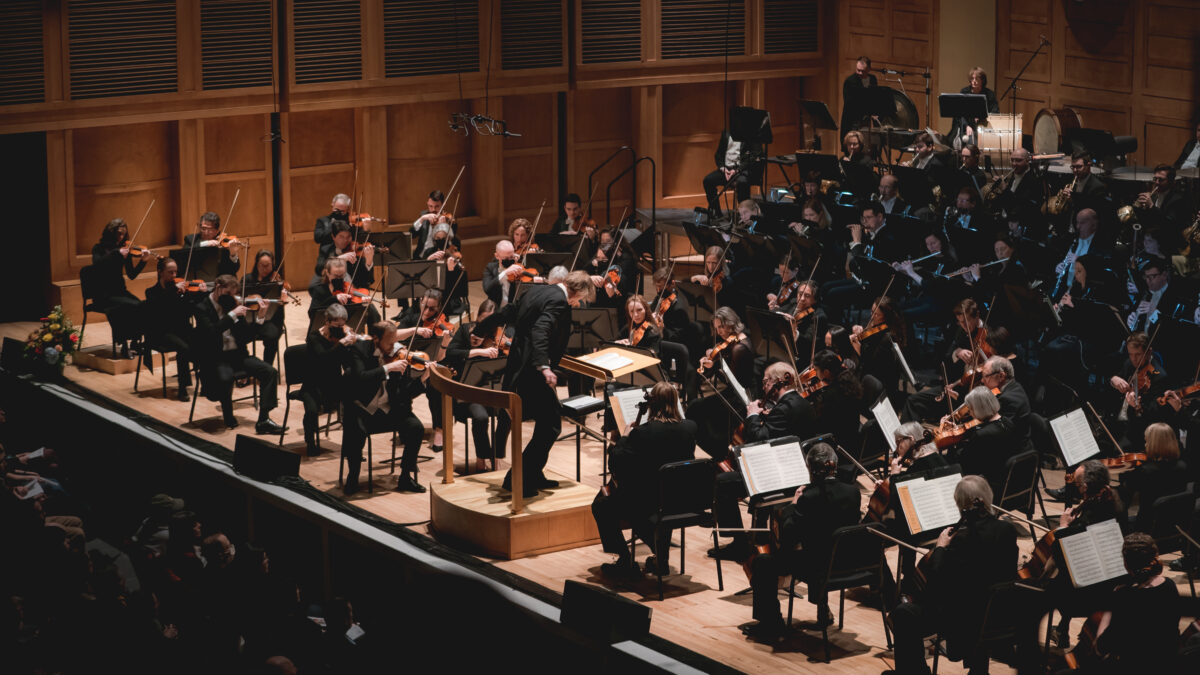
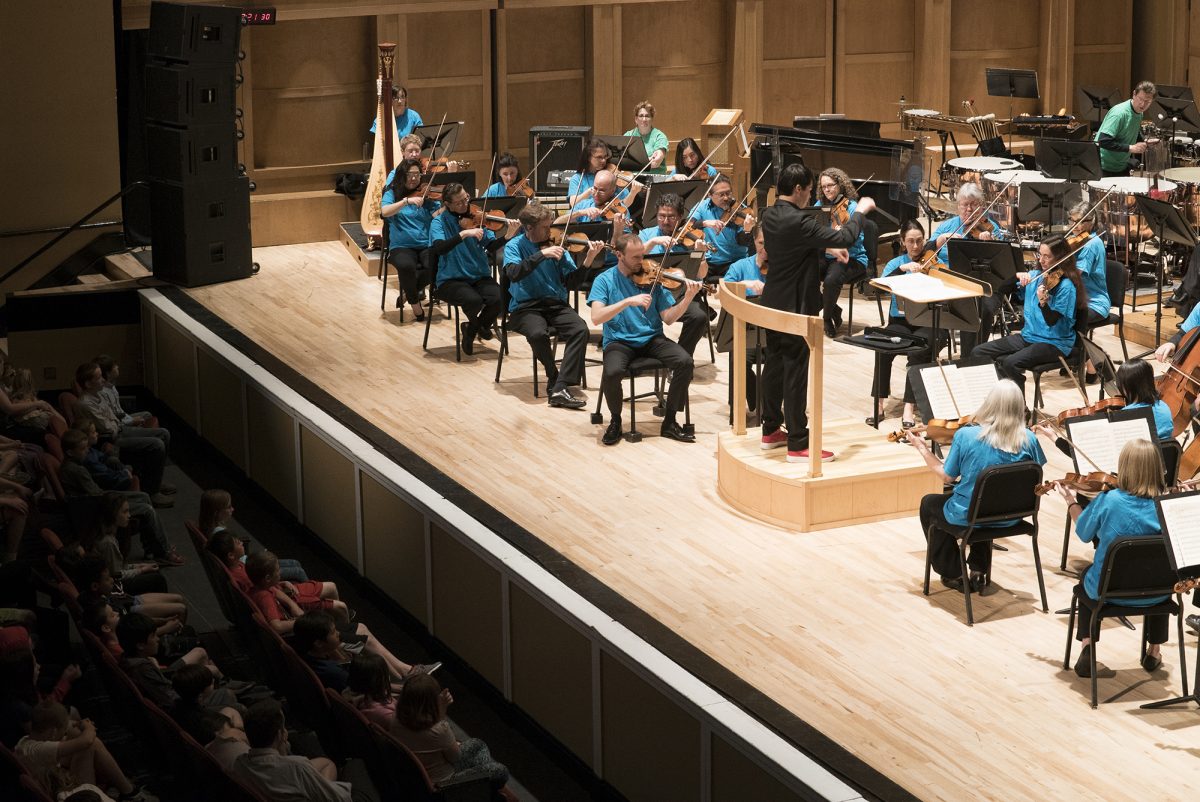
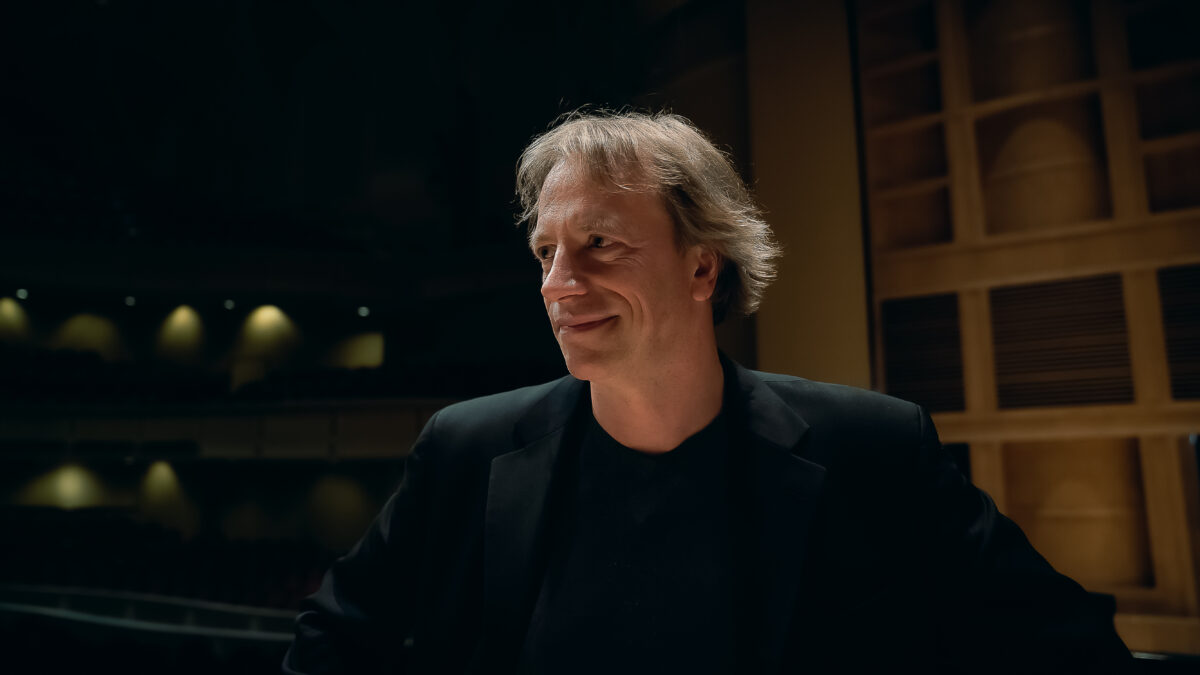
Militikwat (meaning “it has all kinds of sounds” in the Penobscot language) was first performed by the Bangor Symphony Orchestra, under its music director Lucas Richman, at the Collins Center in Orono, ME on April 30, 2023. Today’s performance, with the added movement Dreamland, is the world premiere of the work in this latest form. It is scored for 2 flutes, piccolo, 2 oboes and English Horn, 2 clarinets, 2 bassoons, 4 horns, 2 trumpets, 3 trombones, timpani, percussion, harp, celesta and strings (first and second violins, violas, cellos and basses).
*****
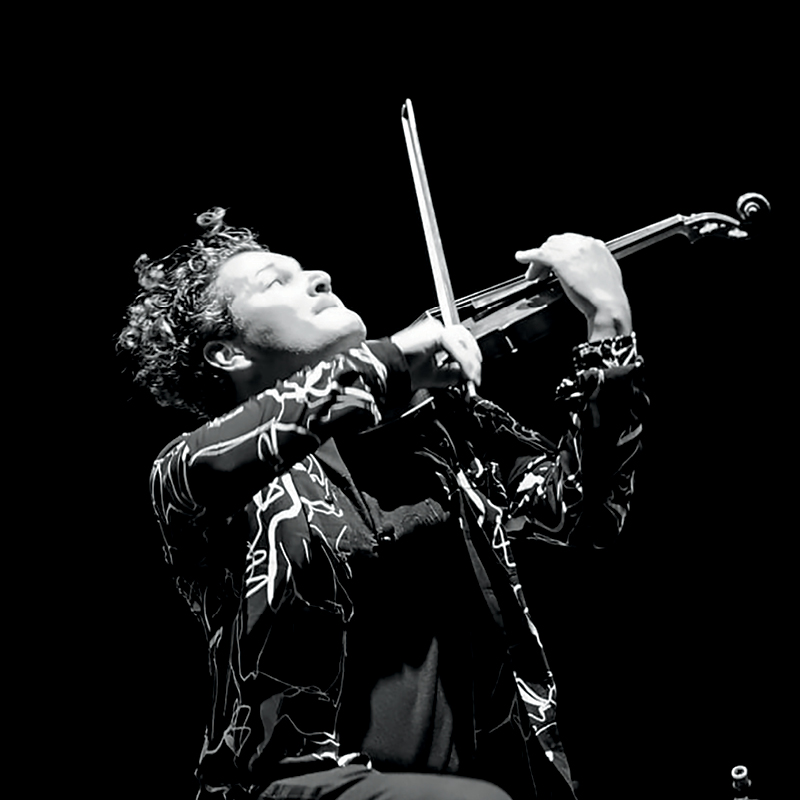
A multi-talented artist and dramatic performer known as Firefly, Jason Brown is a member of the Penobscot Indian Nation, one of five traditionally allied Wabanaki tribal nations in the Atlantic Northeast. He grew up on Panawamskek (Indian Island), a village in the Penobscot River, which runs through his ancestral homeland in central Maine.
A grandson of an elected tribal chief who successfully guided his nation in a major native rights struggle, Jason is an innovative artist who draws on his Wabanaki cultural heritage. With live performance, Firefly is helping to situate Indigenous people in a modern context. As a traditional music keeper of the Wabanaki communities, he has performed for many years throughout Maine and the world, with appearances at the Rock and Roll Hall of Fame in Cleveland, the Reykjavik Art Museum in Iceland, and the Abbe Museum in Bar Harbor, among many others.
Militikwat — meaning “it has all kinds of sounds” in the Penobscot language — had its world premiere with the Bangor Symphony Orchestra in early 2023. At that time, it contained three movements. For these PSO performances, the composer has added a fourth, entitled Dreamland. The work blends Wabanaki and Scandinavian musical traditions with contemporary orchestral textures. Its title reflects both the diversity of sound within the piece and the meeting of Indigenous and Western musical worlds. Maine composer, arranger and conductor Ben MacNaboe provided orchestrations.
The first movement draws from traditional Wabanaki welcome songs, setting a tone of openness and connection. Rhythmic hand-drum patterns and melodic motifs echo ancient songs of greeting, now carried through strings, winds, and percussion. The result feels both ceremonial and modern — a bridge between generations of Wabanaki sound and the full voice of a symphony orchestra.
Movement two, inspired by the Wabanaki song Tutuwaz, turns inward with a more reflective and melodic atmosphere. The third movement bursts to life with the energy of the Penobscot snake dance song, spiraling through shifting rhythms and interwoven melodies that evoke motion and transformation.
The final movement, Dreamland, blends Wabanaki and Scandinavian influences, reflecting Firefly’s own hybrid heritage. The music feels like a conversation between cultures—between drums and strings, cedar and birch, northern lights and morning fire. It’s a personal journey that celebrates identity, belonging, and the beauty of connection.
Together, the four movements of Militikwat celebrate the living spirit of Wabanaki music and its power to evolve, adapt, and be heard in new spaces.
– Martin Webster
********
Gustav Holst
The Planets
Gustav Holst was born in Cheltenham, England in 1874 and died in London in 1934. He completed The Planets in 1916, and it was first performed in London in 1918 by the New Queen’s Hall Orchestra, Adrian Boult conducting. The work is scored for offstage female chorus, 4 flutes, 2 piccolos, alto flute, 4 oboes, English horn, bass oboe, 4 clarinets, bass clarinet, 4 bassoons, contrabassoon, 6 horns, 4 trumpets, 3 trombones, tuba, tenor tuba, timpani (2 players), percussion, 2 harps, celeste, organ, and strings.
*****
Gustav Holst had intriguingly diverse interests. On the one hand he was devoted to the rich tradition of English folk music; he collected and catalogued authentic folk tunes with his lifelong friend Vaughan Williams, and used them frequently in his own music. On the other, he was fascinated by Eastern religions; he even learned Sanskrit in order to translate and set to music parts of the Hindu Rig Veda. With his head in the cosmos—but with his feet firmly planted in his folk heritage—you could say he was uniquely prepared to compose The Planets.
Holst had wanted to compose a large-scale piece for some time. He even had a title: Seven Pieces for Large Orchestra. But it was not until a friend had introduced him to astrology that Holst found a ruling metaphor. He would call his work The Planets, but he would treat them in the astrological sense, not the astronomical.
The Planets has no program as such. “These pieces were suggested by the astrological significance of the planets,” Holst wrote. “There is no program music in them, neither have they any connection with the deities of classical mythology bearing the same names. If any guide to the music is required, the subtitles to each piece will be found sufficient, especially if they are used in a broad sense.” Each movement is a character piece, a musical metaphor for the influence of each ruling planet. The Planets, then, is a work about the human experience, not the cosmic.
So ominous is Mars, the Bringer of War that many have taken it as Holst’s reaction to the bloody madness that was the World War One; actually, Holst had sketched the movement prior to the war’s outbreak. Nevertheless, the sounds of strings being struck with the wood of the bow, the relentless drums, and the boiling harmonies together paint a sonic likeness of evil.
The static backgrounds of Venus, the Bringer of Peace appear frozen in a luminous serenity. Against them, the sweet melody first given by the solo violin and the response introduced by the oboe weave a layer of depth that sounds deceptively simple.
Mercury, the Winged Messenger takes flight as the work’s nominal scherzo, with the musical line deftly flying back and forth among the instruments. The destination is a flowing, restless melody of uncommon grace.
The composer’s intentions aside, it is hard to avoid the astronomical implications of the opening of Jupiter, the Bringer of Jollity. This music is big, and big-hearted, as if celebrating a bold frontier of unimaginable scale. Holst wrote: “Jupiter brings jollity in the ordinary sense, and also the more ceremonial kind of rejoicing associated with religious or national festivities.” The joyous celebration is most poignant in a central hymn tune of noble beauty.
According to Holst, “Saturn, the Bringer of Old Age brings not only physical decay, but also a vision of fulfillment.” Accordingly, the music’s fateful gait inspires dread and wonder in equal measure.
The ominous opening of Uranus, the Magician reminds us of the sorcerer’s dark side, even as the music turns more playful. Holst performs his own musical sleight-of-hand with orchestration that simply sparkles.
The ethereal opening of Neptune, the Mystic brings us to the outer reaches of Holst’s astrological cosmos, and the destination of the suite: the physical world is left behind and we reach the inner workings of the mind. Holst’s portrayal is unsettled, ever searching; the contradictory aspects of human nature are not reconciled here. But perhaps, as the gossamer strands of the wordless chorus drift back into the infinite silence from which they came, they are transcended.
– Mark Rohr